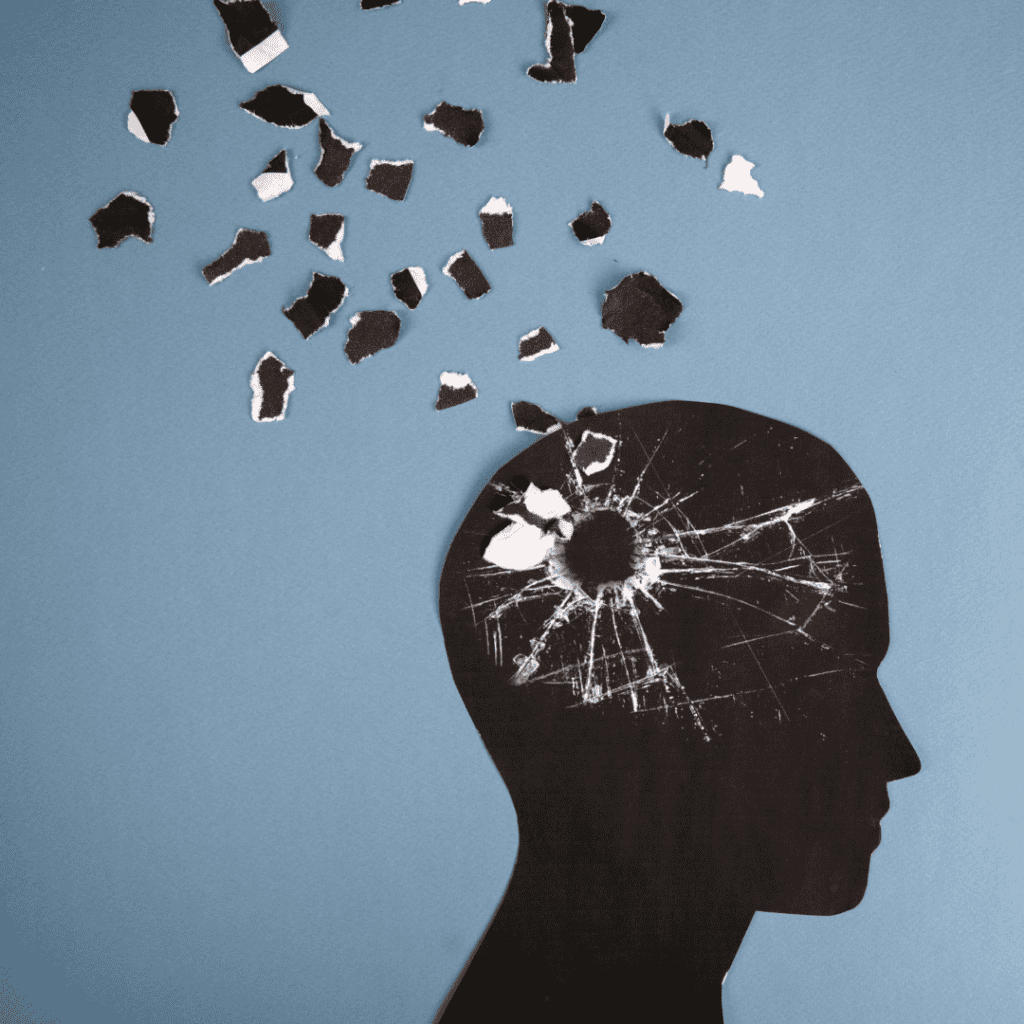
In Canada, June is designated as Brain Injury Awareness Month, a time to raise awareness about the prevalence of brain injuries (including concussion), the challenges faced by individuals with brain injuries, and the need for more services and support. This year’s theme is, “Watch Your Step”, to highlight the often-overlooked risks of falls and their potential to cause traumatic brain injuries (TBI).

My name is Melissa, and after over 5 years of being unable to hold a job due to my concussion symptoms, I am thrilled to now be working part-time as part of the front desk staff at ellephysio. In honour of Brain Injury Awareness Month, I’d like to share my story.
In August 2019, I was sitting at the kitchen table at my Mom’s house playing cards with my nieces, when the chair broke beneath me. I fell backwards and smashed the back of my head on a wooden cabinet on the way down. It happened so fast. I thought I was okay at first, just a little bit of shock. However, I went to work the following week, and I realized there was something seriously wrong. My emotions were all over the place and very intense, I couldn’t do my job, and I felt like I couldn’t handle life. This led to a trip to the emergency room, where I was quickly diagnosed with an “obvious concussion”, told to go home and rest for 3 days and follow up with my family doctor.
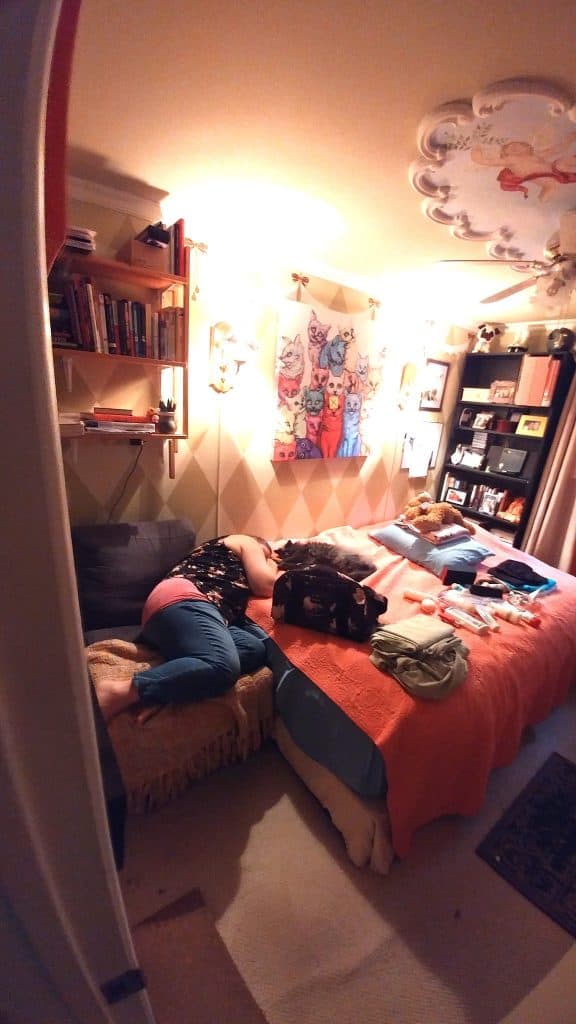
A high percentage of concussions do heal in a short time frame, but I have read that 15-20% of them do not. Unfortunately, I seem to be in that latter category and still currently have symptoms, most notably severe light and sound sensitivity, and neural fatigue, which can result in me struggling to complete even the most basic of tasks. I have, however, made a lot of progress and have come such a long way from those dark days in bed. The pain in my head has decreased dramatically, for which I am very grateful. In the beginning, there was so much pressure in my head that I felt like my brain was 3 times too big for my skull!
My injury has been called a few different things – post-concussion syndrome, traumatic brain injury, and acquired brain injury. According to the Centers for Disease Control and Prevention (CDC), a concussion is classified as a “traumatic brain injury”. The last 5.5 years have been a challenging journey of forced rest, vision therapy, and graded exposure to simple activities we take for granted, like going for a walk or driving your car. If you are experiencing a similar injury, I would like to share with you the Top 5 things that have helped me throughout my recovery.
1. Support system
I have had an incredible support system throughout this journey, which I am very grateful for. People in my inner circle have been so supportive and understanding. I have read many stories from other brain injury survivors who have not had this experience, and it is so grieving to hear. If you are recovering from a traumatic brain injury, seek out a support system if you don’t have one. It is a tough journey and is not one that should be walked alone. There are many groups and organizations that you can connect with where you can meet people who will walk alongside you. A couple of organizations I am aware of are the Ontario Brain Injury Association (OBIA), where you can be connected with a peer mentor who has a similar injury to you that will come alongside you to support you; and the Brain Injury Association of Peel and Halton (BIAPH), that offers support groups, a caregiver relief program, presentations on related topics to brain injuries, and events to attend.
2. Vision therapy
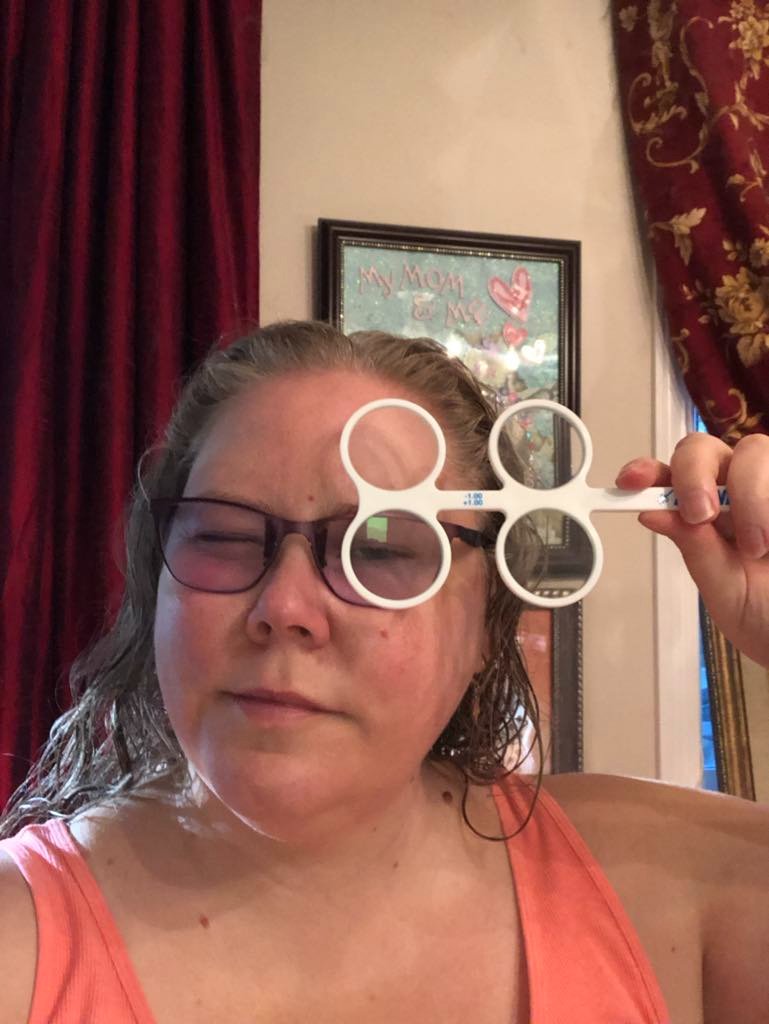
It took two years to figure out that my fall had affected my vision. I was at an appointment with a physiatrist who informed me that, “all of my issues were visual”. What?! The fall didn’t damage my vision in the traditional way of where I couldn’t see, but rather, in how my eyes moved. A visit toa neuro-optometrist was so incredibly validating and helpful. She was the first person I had seen who knew what was going on, and how to fix it! I was so relieved. I was diagnosed with “severe deficiency of saccades” (how your eyes track), and “light sensitivity”, or “severe post-traumatic photophobia”. She prescribed me with glasses with a special tint and a special prism in them, that I still wear now. You may have noticed them if you’ve met me at the front desk. These glasses made such a big difference to me! I was able to walk a lot steadier than I had before. She also put tape on the lenses of my glasses, called binasal occlusion. This helped block my vision where images overlapped, so that my brain could use less energy. And finally, she suggested vision therapy. Vision therapy has been so incredibly tough, but so, so worth it. It is probably the number one thing that has helped me get to where I am today. I have done over 60 sessions of vision therapy, and I continue to plug away at it. Vision therapy is like physio for your eyes!
3. Concussion Rescue: A Comprehensive Program to Heal Traumatic Brain Injury by Kabran Chapek
There were times when my head hurt so much that I wanted to smash it against the wall. (Counterintuitive, I know!) After a year and a half of intense pressure and pain, I came across this book written by Dr. Kabran Chapek, a naturopathic doctor. In it, there is a list of recommended supplements, among other great advice and ideas. I started taking these supplements, and the pressure and pain finally started decreasing. It wasn’t an overnight fix, and it was just one piece of the puzzle, but it certainly helped my physical symptoms.
4. Walking & Exercise
After about a month of being in bed in the dark, my practitioners began encouraging me to start walking. Honestly, I thought they were absolutely nuts. My inward response was, “Don’t you know how terrible I feel?!”. I didn’t believe them when they told me it would help. But actually, the walking did help me feel better – both physically and emotionally. I had to start small though. I started with just walking to the road and back. Then just a little bit further. And then just a little bit further. I wasn’t walking fast or that steadily, but my practitioners kept encouraging me to keep going. I built up to walking 30 minutes over the next several months, and my brain actually loved it. From what I understand, the walking increases oxygen to the brain and oxygen helps the brain heal. The walking also helped my mental health. It just felt good to be moving, to accomplish a goal, and to be outside. I have now worked up to walking for an hour, and it is one of my favourite times of the day. I also started doing aerobic step. I spent a couple of years working towards increasing my heart rate. That was a challenging journey, but definitely worth it! I can now get my heart rate up to 160, symptom free! And again, my brain loves it. I do, however, recommend that you go through this process under the direction and supervision of a physiotherapist or medical professional. I worked with a sport medicine doctor who specialized in concussion management. It was done in a very safe, slow, methodical way.
5. Breathing exercises
After you have sustained a concussion or traumatic brain injury, your body is in constant fight-or-flight mode. It is so important to do restorative exercises in order to engage your parasympathetic nervous system (PNS) and switch your body into the “rest and digest” mode. For me, breathing exercises were how I engaged my PNS. I have a series of breathing exercises that I do:
- Breathe in through my nose for 10 counts and out through my mouth for 10 counts. Do that 20 times.
- Breathe in through my nose for 7 counts and breathe out through my mouth for 11 counts. Do that 20 times.
- Breathe in through my nose for 4 counts, hold for a second, and breathe out through my mouth for 8 counts. Do that 20 times.
- Breathe in through my nose for 4 counts, hold for 4 counts, and breathe out through my mouth for 4 counts. Do that 20 times.
- And finally, breathe in through my nose for 10 counts, hold for 10 counts, and breathe out through my mouth for as long as possible. Do that 20 times.
While you are doing these breathing exercises, it is important that your breathing is coming from your belly and your belly is actually moving up and down. I still usually take a break mid-day to do a series of deep breathing exercises. My brain loves it, and it helps restore my energy so that I can carry on with my day. I am not sure why, but it took me a while to get on board with doing these breathing exercises. But I found out that 45 minutes of deep breathing was equivalent to 5 hours of rest! So getting on board with them was definitely worth it.
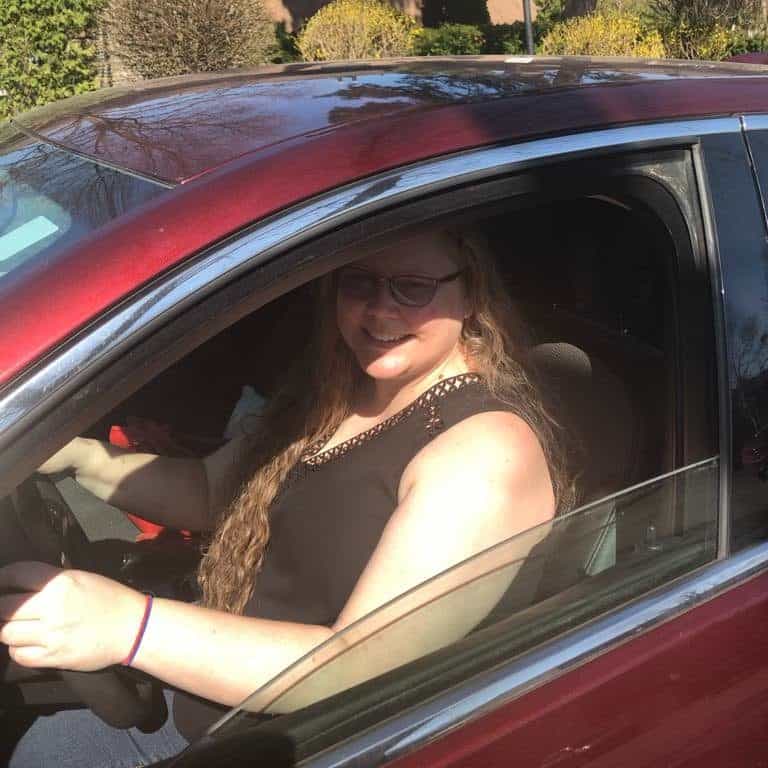
Unfortunately, there isn’t one “quick fix” for traumatic brain injury or concussion, but all of these things added together has helped me get to where I am today. And I am happy to say that after 5.5 years of recovering, I feel like I am finally starting to get pieces of my life back. One of those pieces is returning to work! I’m so grateful for the opportunity ellephysio has given me to get back into the workplace. It feels so good to once again have some kind of a purpose and feel like I am contributing to society. I know that recovering from an injury can be tough, and I am honoured to be a small part of other people’s journeys to recovery.
Did you know?
Did you know that both Leah Franco and Ivanka Videc, physiotherapists at ellephysio, do concussion management and vestibular physiotherapy at the clinic? If you, or someone you know, are struggling with concussion, dizziness, double vision or any other symptoms of vestibular dysfunction; feel free to make an appointment with them!