Preparing for birth shouldn’t fall solely on the birther! Our Prenatal Birth Partner Appointment is a focused, practical session designed to actively involve the support person—partner, spouse, friend, or chosen birth support—in preparing for labour and delivery. ellephysio founder, Karen San Andres, started offering this appointment type over a decade ago, in response to the concerns of her pregnant clients. Over the years, Karen and the ellephysio team, continue to update this service offering with current evidence based techniques.
The Prenatal Birth Partner Appointment combines education, hands-on techniques, and advocacy skills to help birth partners confidently support a vaginal birth and contribute to a positive, supported birth experience. We also discuss the role of pelvic health physiotherapy in birth preparation, with a focus on pelvic floor flexibility, coordination, and the ability to lengthen and relax for delivery—not just strength. This foundational knowledge helps partners better understand positioning, comfort strategies, and hands-on support techniques.

Understanding the Anatomy of Vaginal Birth
We begin with clear, easy-to-understand education on the anatomy involved in vaginal delivery, helping both the birther and birth partner understand how birth works. Topics include:
- The bony pelvis and how pelvic shape and movement affect labour progress
- How the uterus functions and progresses during labour
- The role of the pelvic floor muscles and connective tissues
The Birth Partner as an Advocate
Birth partners play a key role in shaping the birth experience. In this appointment, we focus on advocacy skills that support informed, respectful care. Advocacy is not about confrontation—it’s about supporting informed choice so the birther feels heard, safe, and respected throughout labour and delivery. Birth partners learn how to:
- Support and reinforce the birther’s birth preferences
- Communicate needs clearly and calmly during labour
- Recognize when reassurance, protection, or encouragement is needed
- Help create a calm, grounded birthing environment
Labour and Delivery Positions: Biomechanics Matter
Positioning during labour and delivery can significantly influence comfort, efficiency, and pelvic space. We review a variety of labour and birth positions with a focus on biomechanics. Rather than promoting a single “best” position, we emphasize movement, flexibility, and responsiveness throughout labour. We discuss the differences between upright, side-lying, hands-and-knees, forward-leaning, and semi-reclined positions. For each of these, we cover:
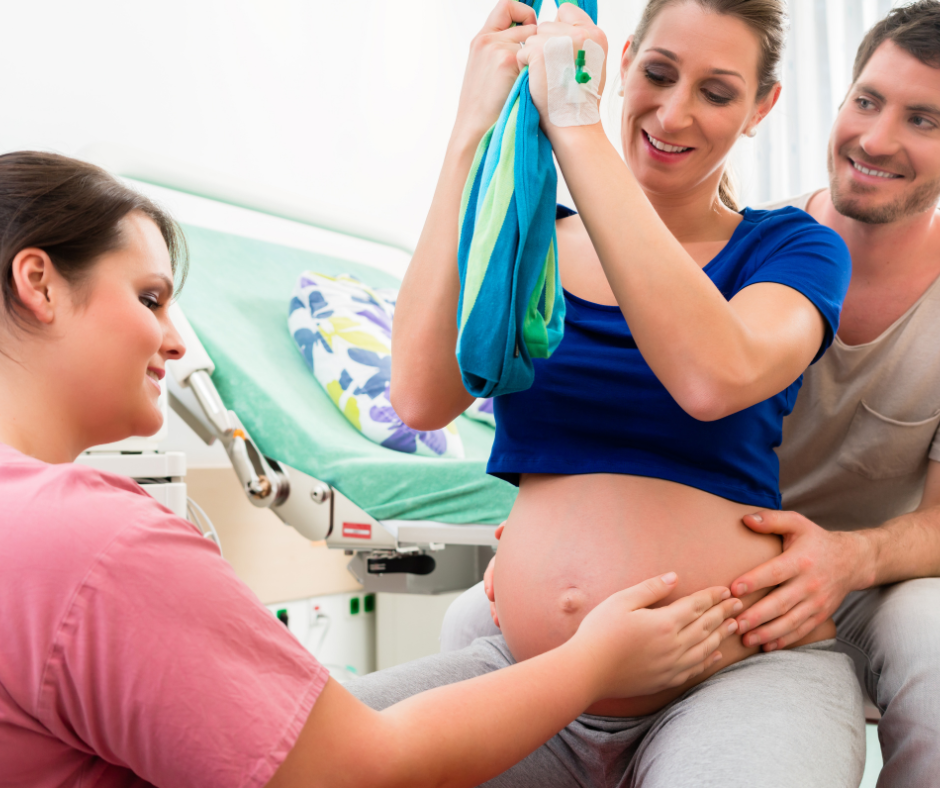
- The role of gravity
- How pelvic dimensions change with movement and posture
- Potential benefits and limitations for comfort and pushing
- When certain positions may be more or less helpful
Hands-On Techniques to Use Before and During Labour
Birth partners are taught hands-on techniques that can be used during pregnancy to improve comfort and support optimal positioning before labour begins. Techniques include gentle supported positioning, movement-based strategies, and comfort-focused touch and physical support. These techniques aim to:
- Reduce common pregnancy-related aches and pains
- Encourage space in the pelvis and abdomen
- Support baby’s positioning in utero
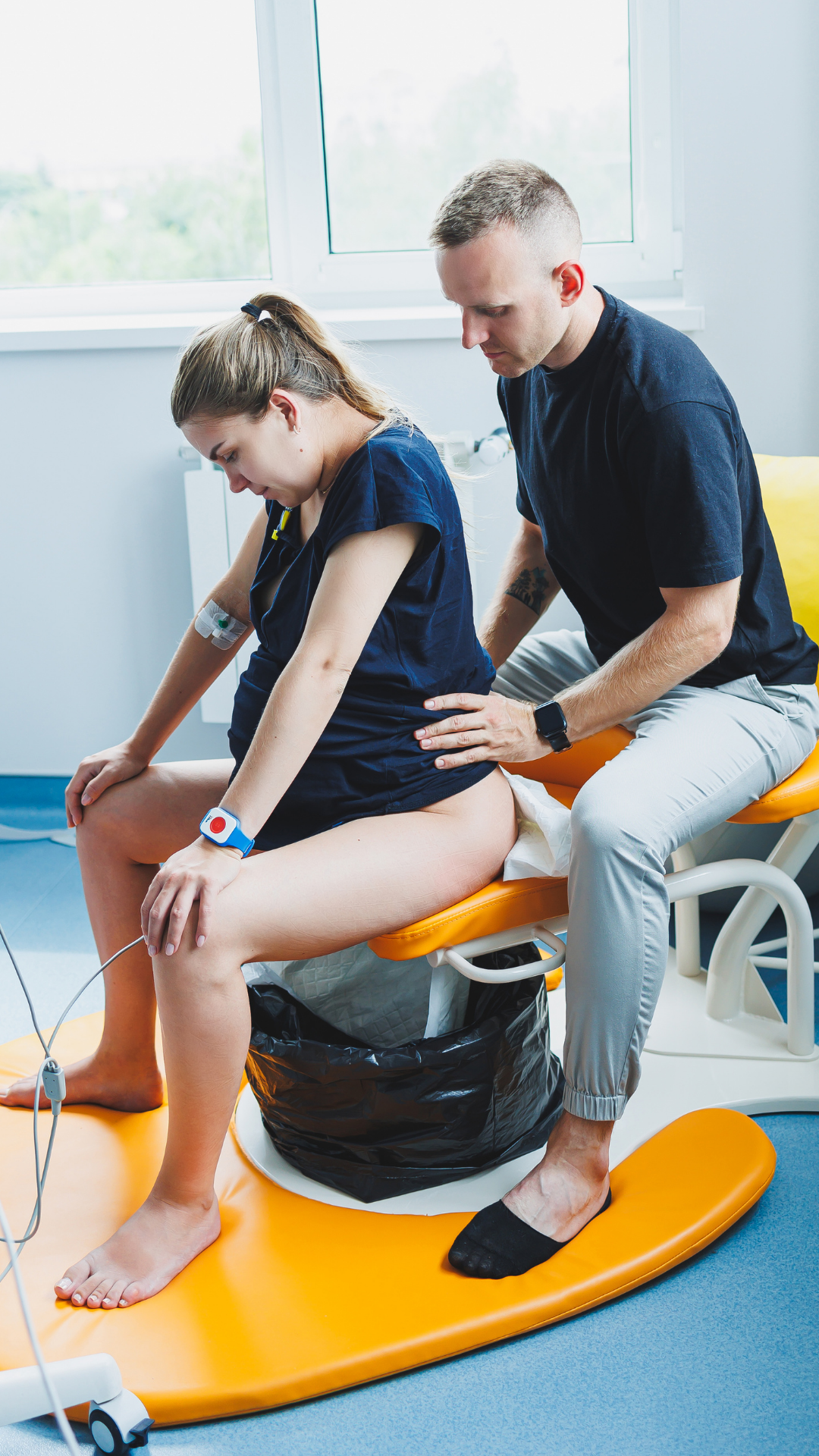
We also teach hands-on techniques that birth partners can use during labour to support comfort, increase pelvic mobility, and baby’s descent. These include pelvic compressions and counter-pressure to support the pelvic girdle during contractions.
The goal is to:
- Encourage descent of baby into the pelvic girdle
- Reduce back labour discomfort and temporarily increase space at the pelvic outlet
- Support the pelvic girdle during contractions
Connective Tissue Techniques for Pelvic Floor Mobility
Beyond muscles, the pelvic floor also consists of connective tissues that need to adapt and stretch for vaginal birth. During the appointment, we teach gentle connective tissue techniques designed to:
- Improve tissue mobility
- Reduce excessive tension or guarding
- Promote flexibility and ease at the pelvic outlet
These techniques are always taught with consent, comfort, and clear communication at the forefront. The goal is not to force change, but to support the body’s natural ability to adapt.
Perineal Stretching: Preparation for Vaginal Birth
Perineal stretching may help the pelvic floor muscles better accommodate stretch and expansion during vaginal birth, potentially reducing the risk or severity of perineal tearing and decreasing the likelihood of an episiotomy. Just as importantly, it helps familiarize the birther with sensations of stretch, which can build confidence heading into delivery. We provide education and instruction on perineal stretching techniques, in-person. This includes:
- When and how to begin perineal stretching
- Proper hand placement and pressure
- How the birth partner can assist safely and respectfully
- How to adapt techniques based on comfort and preference
Supporting Effective and Safe Pushing
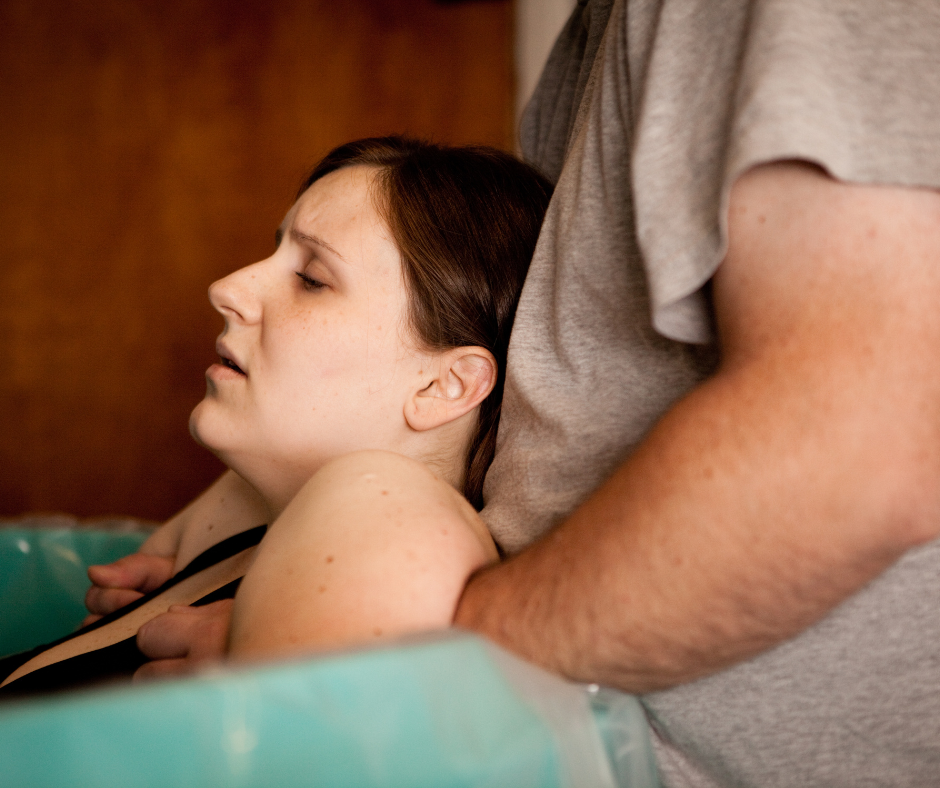
The pushing phase of labour can feel intense and uncertain. During this appointment, birth partners learn how to support pushing in a way that aligns with physiology and the birther’s instincts. This knowledge helps partners support confidence, reduce fear, and promote a more controlled and supported pushing phase. Education includes:
- Different pushing approaches
- How the pelvic floor lengthens and coordinates during pushing
- Positions that may reduce strain on the pelvic floor while supporting descent
- Verbal and physical support strategies for partners
Important Note
Every pregnancy, labour, and birth is unique! The techniques and education provided during a Birth Partner Appointment are intended to support comfort, mobility, and informed participation. We highly recommend that the birther be assessed by a pelvic health physiotherapist BEFORE booking the Birth Partner Appointment, to ensure individualized care.
If you’re interested in preparing for birth and booking a Birth Partner Appointment, we’d love to support you!